
Rome Squares and Fountains: 6-Stop Walking Itinerary for Groups
From the Barcaccia in Piazza di Spagna to the Trevi Fountain, and on to the baroque stage set of Piazza Navona: Rome can also be discovered by following the sound of water. Between one square and the next, alleys, façades and glimpses of the city turn a simple walk into one of the most memorable moments of the trip.
For those visiting the capital with friends, an association or an organised group, the secret is to choose a compact route and leave room for pauses. This walking itinerary through the squares and fountains of Rome links six stops in the historic centre, with practical tips for planning timings, breaks and an overnight stay.
The itinerary at a glance: route, duration and distance
The recommended route is: Piazza di Spagna → Trevi Fountain → Piazza Colonna → Piazza della Rotonda and the Pantheon → Piazza Navona → Piazza Mattei.
- Start: Piazza di Spagna, by the Fontana della Barcaccia;
- Finish: Piazza Mattei, by the Fontana delle Tartarughe;
- Approximate distance: about 3–3.5 km, depending on the streets chosen;
- Walking time: about 50–70 minutes, without stops;
- Recommended duration for groups: 3–4 hours, including explanations, photographs and a short break;
- Type of visit: outdoor walk; any admission fees must be added separately;
- Road surface: stretches of cobblestones, uneven paving and road crossings.
Distances and times are organisational estimates: crowds, the group's pace and additional visits can lengthen the programme. Transfers from the hotel are not included.
Planning a group stay in Rome? Email info@hoteldomidea.com with your dates, number of participants and rooms required: ask Hotel Domidea for a proposal and build your trip around the overnight stay.
1. Piazza di Spagna and the Fontana della Barcaccia
The route begins at the foot of the Spanish Steps, in one of the city's most recognisable squares. Before looking up, stop at the Fontana della Barcaccia, designed by Pietro Bernini: its boat-like form and its position sunk below the level of the square set it apart from Rome's grand monumental fountains.
It is a stop that introduces the theme of the walk well: here water is not merely decoration, but part of the relationship between architecture and urban space.
For the group: agree on a precise meeting point at the edge of the square, without blocking the passageways. It is not necessary to climb the steps to follow the itinerary.
Suggested time: 20–25 minutes.
From Piazza di Spagna continue towards Trevi via Via di Propaganda and Via di Sant'Andrea delle Fratte.
2. Trevi Fountain: the stop that needs the most careful planning
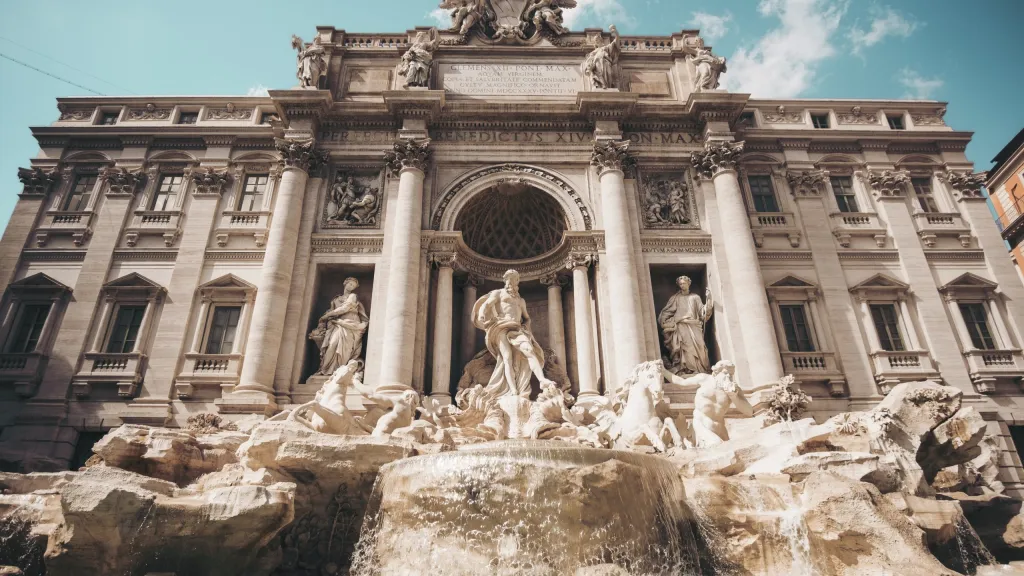
Reaching the Trevi Fountain on foot means seeing it appear almost suddenly among the streets of the centre. The contrast between the narrow approaches and the monumental scale of the fountain is part of its wonder.
To appreciate it, take a few minutes before taking photographs: watch the movement of the figures, the sculpted rock and the way the water fills the scene.
For groups, this is also the stop that requires the most flexibility. Do not schedule tight timings, and agree where to regroup after the photographs.
Is the Trevi Fountain free?
The fountain can be viewed for free from outside the monumental area. Since 2 February 2026, access to the inner perimeter closest to the basin costs €2 for non-resident visitors, except where exemptions apply.
Before your visit, check the official Trevi Fountain website for conditions, opening times and any changes. Buying a ticket does not guarantee immediate access.
Suggested time: 25–40 minutes for the stop; allow extra time for any queues.
3. Piazza Colonna: a pause among Rome's landmarks
From Trevi, reach Via del Corso and Piazza Colonna, recognisable by the Column of Marcus Aurelius. The fountain and the palaces surrounding it offer a different view from the previous stop: less focused on a single monument, more connected to the square as a whole.
It is a good place to see how Rome combines ancient remains, spaces of public life and everyday routes.
For the group: consider a brief stop that fits with the passing pedestrians and any restrictions on site.
Suggested time: 10–15 minutes.
Continue towards Piazza della Rotonda via Piazza di Montecitorio and Via della Colonna Antonina.
4. Piazza della Rotonda: the Pantheon and the fountain
Arriving in Piazza della Rotonda reveals one of the most striking views on the itinerary: the portico of the Pantheon, the fountain with its obelisk and the bustle of the square.
This is the place to slow down. Look at the proportions of the monument in relation to the surrounding space, then look for a frame that includes both the fountain and the Pantheon.
This walk includes an exterior visit. If you want to go inside the Pantheon, add a separate stop, checking tickets, visiting arrangements and group rules on the Pantheon's official website. Do not include admission in the walking timings without allowing an adequate margin.
Suggested time: 20–25 minutes for the square and the exterior.
From here continue towards Piazza Navona via Via Giustiniani and across Corso del Rinascimento.
5. Piazza Navona: three fountains in one square
If you are looking for a stop that tells the story of baroque Rome, Piazza Navona is the heart of this itinerary. Its elongated shape invites you to walk through it slowly, viewing it from several points.
The three fountains to look out for are:
- the Fontana dei Quattro Fiumi, at the centre, a masterpiece by Gian Lorenzo Bernini;
- the Fontana del Moro, at the southern end;
- the Fontana del Nettuno, at the northern end.
To make the visit more engaging, avoid one long explanation: alternate short stories with moments of quiet observation. The group will have time to notice different details and photograph the square without turning the stop into a rush.
For the group: set the meeting point and departure time in advance. If you plan a break in a café, arrange it beforehand according to the number of participants.
Suggested time: 30–40 minutes.
6. Piazza Mattei and the Fontana delle Tartarughe
The final stop leads to Piazza Mattei, through the streets of the centre towards Via dei Funari. Here the Fontana delle Tartarughe changes the mood of the walk: after the monumental spaces, the route ends in a more intimate square and a work of art to be enjoyed in its details.
It is a fitting conclusion for those who want to add a less obvious glimpse of Rome to the most famous attractions, without leaving the historic centre.
Suggested time: 15–20 minutes.
If you want to continue, you can add a walk through the historic Jewish Quarter or towards the Theatre of Marcellus, allowing extra time.
How to organise the walk for a group
A short route on the map can become demanding when travelling in a large group. To keep the day enjoyable:
- agree on the pace before setting off: age, mobility and interests matter more than distance;
- plan a real break: for large groups, toilets and seating require organisation;
- choose recognisable meeting points, avoiding vague instructions such as "by the fountain";
- consider a licensed guide and personal audio headsets, which help people hear in crowded squares;
- leave a margin after Trevi, since queues can change the programme;
- arrange transfers separately: the pedestrian route in the historic centre does not match an itinerary accessible to coaches.
For those travelling by coach, pick-up, drop-off and stopping points must be checked with the operator according to current regulations and the date of travel.
Short version: four stops
If the group has less time, choose Piazza di Spagna → Trevi Fountain → Pantheon → Piazza Navona, without including Piazza Colonna.
Allow roughly 2–3 hours, depending on crowds and the length of breaks. This shorter version also leaves more time for lunch or an afternoon visit.
When to set off?
A morning start helps spread the day's activities more evenly; late afternoon has a different atmosphere and allows you to continue to dinner. No time of day guarantees quiet squares.
In the hottest months avoid the central hours, bring water and take more breaks. In rain, bear in mind that cobblestones can become slippery.
Where to stay for a group visit to Rome
The walk starts in the historic centre, but the stay should be planned with arrival, departure and transfers in mind.
Hotel Domidea, a 4-star hotel in eastern Rome, is an option to consider for a group's overnight stay. The hotel is outside the area covered by this itinerary, so the connection to the centre must be planned.
The hotel offers a shuttle service by reservation to the Rebibbia metro station. For a group, check availability, capacity, timings and conditions directly before including it in your programme.
To request a proposal, send your dates, number of guests, rooms required and any transfer needs.
The next step? Turn the itinerary into an organised trip
Request a proposal for your group now: info@hoteldomidea.com
Already chosen your dates and want to book your stay? Check availability and rates now: book Hotel Domidea.
For a group booking, contact the hotel by email to check together the availability you need.
FAQ: Rome's squares and fountains on foot
What is a good walking itinerary through Rome's squares and fountains?
A compact route links Piazza di Spagna, the Trevi Fountain, Piazza Colonna, Piazza della Rotonda with the Pantheon, Piazza Navona and Piazza Mattei with the Fontana delle Tartarughe.
How long does this itinerary take?
For a group, plan on 3–4 hours, including stops, photographs and a short break. Interior visits, queues and transfers from the hotel need extra time.
How far do you walk?
The full itinerary is approximately 3–3.5 km. The distance varies according to the streets chosen and any detours.
Can you see the Trevi Fountain, the Pantheon and Piazza Navona in one morning?
Yes, they can be linked on foot in a single morning. To keep a relaxed pace, consider the Pantheon from the outside; any interior visit should be planned separately.
Do you have to pay to see the Trevi Fountain?
The fountain can be viewed for free from outside the monumental area. Since 2 February 2026, access to the inner perimeter costs €2 for non-resident visitors, except where exemptions apply. Check the latest information on the official website.
Is the route suitable for children and older people?
It can be adapted with frequent stops and a shorter version. The choice depends on the walking ability of the participants, the weather and the crowds.
Is the itinerary wheelchair accessible?
It should not be considered fully accessible without a prior check. Cobblestones, changes in level, crowded passageways and access to individual attractions require an assessment of the route according to personal needs.
Is Hotel Domidea close enough to the stops to walk?
Hotel Domidea is in eastern Rome, outside the pedestrian route of the historic centre. You will need to arrange a transfer before starting the walk.
How do I request a group quote from Hotel Domidea?
Write to info@hoteldomidea.com, stating your dates, number of participants, quantity and type of rooms required and any organisational needs.