
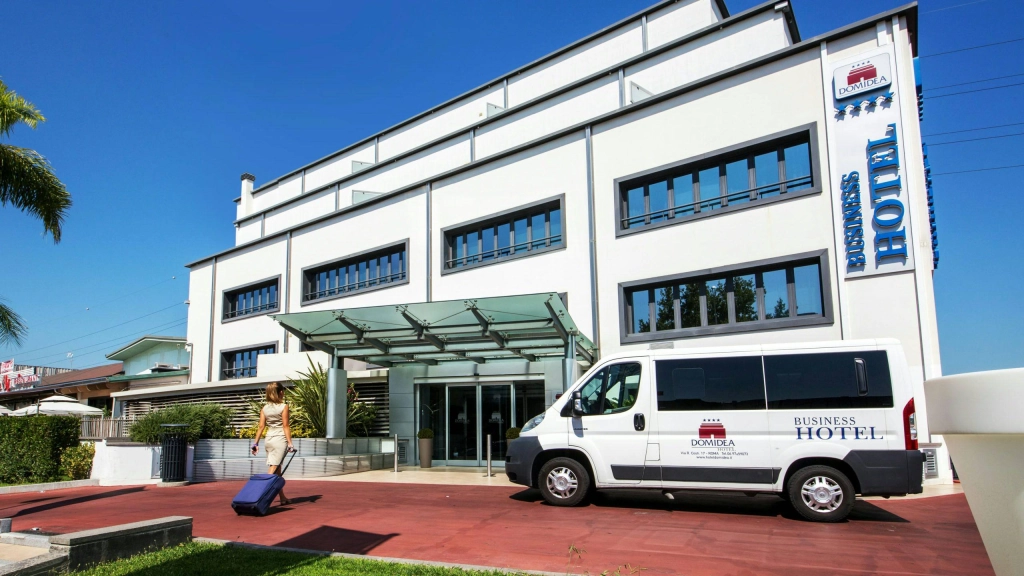
Apartment or Hotel for a Medical Stay?
When an appointment, operation or a relative’s admission requires time away
from home, one question appears immediately: should you book an apartment or
a hotel room?
The answer depends on far more than the nightly price. A medical stay
involves uncertain dates, patient independence, companion requirements,
hospital travel, meals, housekeeping, parking and access to help during the
evening.
An apartment may offer a kitchen and separate rooms. A hotel can remove many
daily chores and provide reception, housekeeping, breakfast and practical
assistance. The best option is the one that reduces the total burden of the
stay, not the one with the lowest initial price.
This guide compares hotels, apartments and serviced residences for patients,
relatives and companions, with particular attention to medical stays in
Rome.
availability to change: check rooms and rates now and book Hotel Domidea
online.
What is a medical stay?
A medical stay can involve planned admission, surgery, pre-admission
testing, consecutive appointments, day hospital, day surgery, treatment
cycles, postoperative checks, waiting for discharge, supporting a hospital
patient or a multi-day diagnostic pathway.
It does not mean the accommodation is a healthcare facility. Hotels,
apartments and serviced residences provide lodging, not treatment, clinical
monitoring or nursing care. This distinction is essential after sedation,
anaesthesia or any discharge requiring a companion.
The short answer: when to choose a hotel or apartment
Choose a hotel more readily when: the stay is short or uncertain, you
are alone, most of the day is spent at hospital, and you value 24-hour
reception, housekeeping, breakfast, taxi assistance and fewer chores.
Choose an apartment more readily when: you will stay for several weeks,
several people are travelling, the kitchen will genuinely be used, separate
rooms matter and you can manage groceries, cleaning and maintenance.
Consider a serviced residence when: you want a kitchenette combined with
some structured services.
Duration alone does not decide. One person staying for a month but spending
every day in hospital may prefer a hotel; a family of four staying ten days
and cooking daily may find an apartment more practical.
Hotel and apartment compared
| Criterion | Hotel room | Apartment |
|---|---|---|
| Reception | Often available, sometimes 24 hours | Depends on host |
| Housekeeping | Managed by property | Self-managed or extra |
| Linen | Generally included | Must be checked |
| Breakfast | Often available | Self-catered |
| Kitchen | Usually unavailable | Generally available |
| Taxi assistance | Reception may arrange | Self-arranged |
| Late arrival | Easier with 24-hour reception | May have limits or fees |
| Uncertain duration | Depends on rate and availability | Depends on
contract |
| Space | Varies by category | Often greater |
| Maintenance | Managed by hotel | Depends on owner |
| Domestic privacy | Less independence | Greater independence |
| True cost | More services included | Possible fees, cleaning and utilities
|
Always read the exact inclusions, as every property and contract differs.
1. Duration and uncertain dates
A discharge date is not always final. Tests, transfers and clinical progress
can shorten or extend the visit.
In a hotel, you can request an extension, subject to availability. Your room
may already be reserved. Early departure is governed by the selected rate.
In an apartment, the contract may include a fixed period, minimum stay or
penalties. An extension may be impossible, and an early departure may not be
refundable.
When dates are unstable, compare the value of amendable conditions with the
saving from a rigid booking.
2. Total cost: the displayed price is not enough
For a hotel, include room, applicable taxes, breakfast, meals, parking,
garage and extras.
For an apartment, include rent, platform commission, final cleaning,
deposit, utilities, Wi-Fi, linen, parking, groceries, transport and
additional cleaning.
Then include time. Shopping, cooking and cleaning can become exhausting
after a full hospital day.
3. Housekeeping and linen
Reducing household work can make a major difference. Hotel housekeeping and
linen follow the property’s procedures, and guests can communicate privacy
preferences.
In an apartment, confirm intermediate cleaning, linen changes, rubbish and
maintenance. One final clean does not equal regular service during a
multi-week stay.
Neither an ordinary hotel nor apartment provides clinical sterilisation. If
the medical team requires special conditions, confirm whether standard
accommodation is appropriate.
4. Kitchen, breakfast and meals
A kitchen is the apartment’s clearest advantage. It may be decisive for
families, very long stays or guests committed to preparing every meal.
Ask honestly whether you will have the time and energy to shop and cook,
whether you need simple breakfasts or full meals, and whether a diet is a
preference or clinical prescription.
A hotel simplifies routine through breakfast, bar and dining. Hotel Domidea
provides an international buffet breakfast, cocktail bar and dining at the
hotel or nearby partner restaurants, depending on operations.
For preoperative fasting, allergies or therapeutic diets, follow healthcare
instructions and confirm any hotel arrangement in advance.
5. Practical assistance and reception
Reception is not medical care, but it can help book taxis, arrange airport
transfers, manage late arrival, store luggage, provide directions, check
extensions and resolve room problems.
Apartment support depends on the owner or manager. Ask who responds at night
and how lost keys, hot-water failures or electrical problems are handled.
Hotel Domidea has multilingual 24-hour reception, luggage storage and taxi
and transfer booking.
6. Late arrival and unpredictable schedules
Emergency admission, flight delays or an extended hospital day may shift
check-in.
Round-the-clock reception usually makes arrival easier, although guests
should report delays. Apartments may offer self check-in, key boxes, time
restrictions or surcharges. Test and understand the procedure before
travelling.
7. Space, privacy and number of guests
Apartments often provide living space, a kitchen and separate bedrooms. This
helps when relatives rotate or rest and daily activity need separation.
Hotel rooms can be more compact, but categories and suites vary. Hotel
Domidea offers Standard, Executive, Club Floor, Junior Suite, Superior Club
Floor and Luxury Suite accommodation. Compare dimensions and facilities in
the chosen rate.
For one person who spends the day at hospital, a large property may be
unnecessary. For two remote workers, a cramped room may be difficult.
8. Wi-Fi and work
Many relatives continue working. Look beyond “Wi-Fi included” and consider
desk, chair, quiet, sockets and coverage.
In an apartment, ask about line reliability and fault support. In a hotel,
reception may respond to connection problems and offer alternatives where
available.
Hotel Domidea includes complimentary Wi-Fi. Club Floor rooms are designed
for business travellers, with work areas and enhanced services under
applicable conditions.
9. Parking and daily travel
In Rome, traffic and parking can transform the comparison. Check on-site
parking, reservations, full-stay cost, covered or outdoor space, guarded
status, overnight access, hospital route and restricted-traffic zones.
A central apartment without parking can cost more than a well-connected
hotel outside the centre. Hotel Domidea is close to the Tor Cervara exit of
the A24 and Exit 14 of the GRA. It has private unguarded outdoor parking
subject to availability and an unguarded covered garage, bookable for a fee
and subject to capacity.
10. Security and unexpected problems
Consider access, lighting, locks, staff presence and emergency procedures.
Hotels have organised personnel and processes. Apartments may offer privacy,
but you need a reliable contact.
Neither is a medical facility. Contact emergency services for a medical
emergency.
11. Accessibility and reduced mobility
“Accessible” is not enough. Ask about entrance steps, lifts, door width,
shower or bath, grab rails, turning space, distance from parking and route
to the room.
Contact hotels before booking so staff can identify a suitable available
room. For apartments, check the building entrance, floor and lift as well as
the unit itself.
12. Privacy and medical information
Hotels and hosts need booking information, not your diagnosis. Share only
what is needed to organise accessibility, timing and services.
An exemption may require a statutory declaration containing specified
details, but not a complete clinical history. Do not send medical records to
the accommodation provider.
One night, one week or one month
One night before surgery
A hotel is often simplest: arrive, rest, breakfast if permitted and taxi.
Confirm fasting instructions and arrange the required companion.
Three or four nights for tests
A hotel removes shopping and cleaning. An apartment may make sense for
several people or genuine kitchen use.
One or two weeks during admission
The comparison is closer. Calculate meals, parking, cleaning, fees,
transport and time. Consider flexible conditions.
One month or longer
Apartments and serviced residences become more attractive for kitchen,
washing machine and space. A hotel can remain competitive for one person,
uncertain dates and guests prioritising services.
Recurring treatment
Familiarity with one property can simplify repeated visits. Ask about
recurring stays, but do not assume a fixed medical rate.
Different needs for patients and companions
Patients prioritise accessibility, rest, bathroom, companion support, taxis
and clinical instructions. They should stay outside hospital only with
medical approval.
Relatives prioritise reception, work, meals, parking and flexibility.
Removing chores may matter more than having a kitchen.
Several relatives may benefit from separate rooms and a kitchen, but should
compare bathrooms, actual beds, cleaning and daily transport.
Older companions may prioritise lifts, distance, taxis, meals and reception
over domestic independence.
Recuperation in a hotel or apartment: an important warning
“Recuperation” is not automatically suitable for normal accommodation. After
surgery, patients may need dressings, symptom monitoring, equipment or the
continuous presence of another adult.
Ask the healthcare team whether the patient can stay in normal
accommodation, remain alone, what activities to avoid, when to return and
whether professional home care is required.
Hotels and hosts must not be asked to provide healthcare tasks. Professional
assistance must be arranged through authorised providers.
Rome visitor tax and medical exemptions
Rome applies a visitor tax to non-residents staying in qualifying
accommodation, under current rules.
The municipal regulations provide an exemption for people requiring
treatment and, within specified limits, those supporting an admitted
patient, as well as parents accompanying minors requiring care. A statutory
declaration containing required patient, place-of-treatment and date
information is required.
Rules, forms and procedures can change. Before arrival, check Roma
Capitale’s official information, ask the accommodation which declaration is
required, prepare documentation and never assume automatic exemption.
The exemption may apply to hotels and other accommodation subject to the tax
when requirements are met. It is not a discount on the room price.
Hotel Domidea as a base for a medical stay in East Rome
Hotel Domidea offers a useful combination for independent patients
authorised to stay outside hospital, relatives and companions:
multilingual 24-hour reception;
85 modern, spacious rooms;
several room and suite categories;
complimentary Wi-Fi;
international buffet breakfast;
cocktail bar;
dining at the hotel or nearby partner properties, depending on operations;
private unguarded outdoor parking, subject to availability;
an unguarded covered garage, bookable for a fee and subject to
availability;
luggage storage;
taxi and airport-transfer booking;
a courtesy shuttle to selected metro stations, by reservation, at set
times and subject to availability.
The hotel is at Via Raffaele Costi 17/21, close to the A24 and GRA—an option
worth considering for East Rome journeys.
The courtesy shuttle is not medical transport or a direct service to every
hospital. Confirm destinations and terms for your dates.
How to enquire without sharing sensitive information
Provide provisional check-in and check-out, guests, room preference, car,
garage needs, arrival time, possible extension, accessibility and billing
requirements.
Do not include diagnoses, reports or unnecessary medical information. For a
tailored enquiry, email
info@hoteldomidea.com.
Final checklist
1. Confirm the hospital site and entrance.
2. Estimate minimum and maximum duration.
3. Decide daily transport.
4. Map the route at the actual time.
5. Compare total rather than initial cost.
6. Decide how often you will genuinely cook.
7. Check housekeeping and linen.
8. Verify evening support and late arrival.
9. Confirm parking for every night.
10. Request accessibility details.
11. Read cancellation and amendment rules.
12. Arrange prescribed companion and care.
13. Check eligibility for a visitor-tax exemption.
14. Avoid sharing unnecessary health data.
Mistakes to avoid
Automatically choosing an apartment because it “costs less”.
Automatically choosing a hotel because it “is easier”.
Looking only at distance.
Ignoring time spent shopping, cooking and cleaning.
Booking rigid terms with uncertain dates.
Assuming accessibility.
Assuming a hotel provides healthcare.
Assuming visitor-tax exemption is automatic.
Sending medical reports to a host.
Frequently asked questions
Is a hotel or apartment better for a medical stay?
A hotel often works better for short or uncertain stays, one person and
service needs. An apartment may be better for several people, long stays and
daily kitchen use. Compare total cost and real routine.
How much does accommodation near a Rome hospital cost?
There is no single price. It depends on area, season, duration, property,
guests and services. Include accommodation, fees, cleaning, meals, parking,
transport and taxes.
Is an apartment always cheaper for one month?
No. Add commission, cleaning, utilities, Wi-Fi, linen, parking and daily
management. A hotel may remain competitive for one person.
Can a patient stay in a hotel after surgery?
Only with medical approval. A hotel does not provide healthcare and cannot
replace a required companion or professional home care.
Can guests cook in a hotel room?
Usually not unless facilities are explicitly authorised. Do not use
prohibited personal appliances. Choose an apartment or serviced residence if
a kitchen is essential.
Do hotels accept one-month stays?
Yes, subject to availability and terms. Enter the complete dates or request
information. Do not assume a fixed monthly rate.
How can a hospital-related stay be extended?
Contact the property as soon as an extension becomes likely. It depends on
availability and your contract or rate.
Does a companion pay Rome visitor tax?
The regulations provide medical exemptions under precise conditions and with
a declaration. Confirm current eligibility and forms with Roma Capitale and
the accommodation.
Does Hotel Domidea offer medical rates?
Do not assume a specific rate. Contact the hotel for extended or tailored
stays and check available options for your dates.
Does Hotel Domidea have parking?
Yes. It provides private unguarded outdoor parking subject to capacity and
an unguarded covered garage, bookable for a fee and subject to availability.
Can Hotel Domidea arrange a taxi?
Yes. Reception can assist with taxi and airport-transfer booking. This is
not medical transport.
How can I enquire about a medical stay?
Email info@hoteldomidea.com with dates,
guests, car, arrival and practical requirements, without unnecessary medical
details.
Choose the option that removes burdens, not merely the cheapest one
During treatment or admission, accommodation is valuable for the problems it
prevents. An apartment offers autonomy and a kitchen; a hotel offers
services, practical assistance and fewer daily chores. Match the decision to
duration, group size, patient needs and real routine.
Hotel Domidea is worth considering in East Rome for modern rooms, 24-hour
reception, Wi-Fi, breakfast, dining, parking and taxi and transfer
assistance.
Medical dates may change, but available rooms can sell out: enter your
dates now, check the real rate and book Hotel Domidea
online.
For a longer stay, uncertain dates, parking or accessibility, email
info@hoteldomidea.com now.
---