
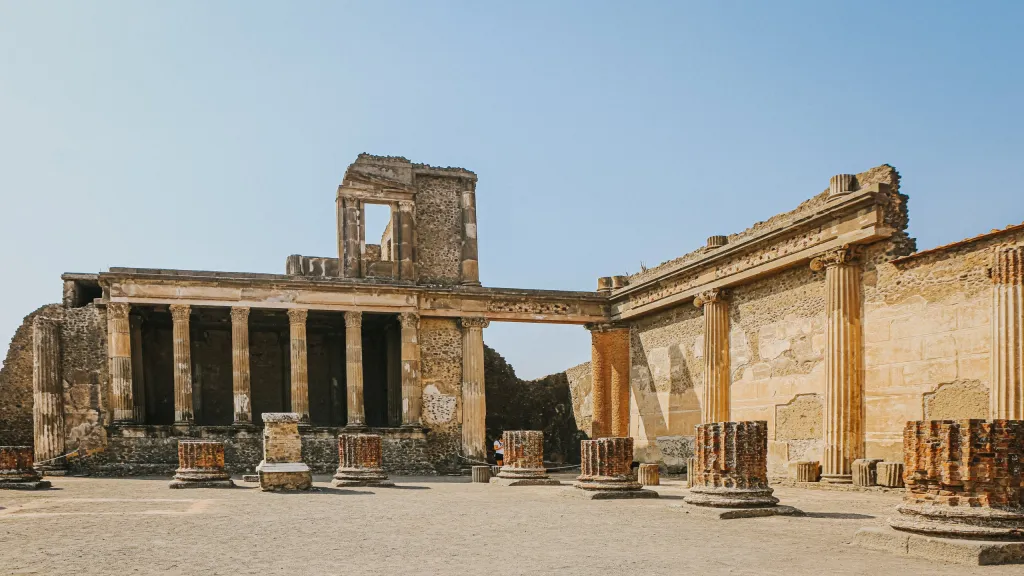
Ostia Antica in Half a Day: Rome's "Pompeii" Is More Surprising Than You Think
Stone-paved streets, two-thousand-year-old apartment blocks, mosaic baths, shops, warehouses, temples and a theatre that still evokes the sound of a Roman audience: Ostia Antica is the ancient city near Rome that too many visitors discover too late. It is often called “Rome’s Pompeii”, a memorable but imperfect comparison. Pompeii was halted by the eruption of Mount Vesuvius; Ostia changed gradually with the Tiber, the imperial harbours and Rome itself. That difference is precisely why it matters: this is the story of a working, commercial and multicultural port city.
Can you visit Ostia Antica in half a day? Yes—if you arrive early, follow a selective route and avoid confusing the excavations with the medieval village, the beach, Portus or the Museum of the Roman Ships. This guide includes a three-hour itinerary, a two-hour highlights version and practical advice on tickets, Metromare, parking, accessibility, children and weather.
Adding Ostia Antica to your Rome stay? The best-value room categories can disappear quickly: check Hotel Domidea’s live prices and availability and book directly now. For information about rooms, parking and services, email info@hoteldomidea.com.
Half-day visit: quick answers
| Question | Practical answer |
|---|---|
| How long do I need? | Three hours is a good compromise; two hours allows only a tightly edited route. |
| Is it really Rome’s Pompeii? | It is a useful analogy, but the cities have different histories. Ostia is exceptional for Rome’s port and everyday urban life. |
| What are the essentials? | Decumanus, Baths of Neptune, Theatre, Square of the Corporations, apartment blocks, Forum and Capitolium. |
| When is it open? | Normally Tuesday to Sunday and public holidays from 8:30 am, with seasonal closing. Usually closed on Mondays. |
| When is last admission? | One hour before the published closing time. That is too late for a meaningful visit. |
| How much is admission? | At editorial verification, the €18 combined ticket was valid for eight consecutive days; always check current terms. |
| How do I get there without a car? | Take Metromare to Ostia Antica station, checking Cotral for works, disruptions and replacement buses. |
| Is there parking? | The Park lists an unattended visitor car park. Never leave valuables in the vehicle. |
| Is the site on the beach? | No. The ancient coastline was different, and today’s Lido requires another journey. |
Why people call it Rome’s Pompeii
The comparison comes from the experience of walking through a genuine Roman city rather than looking at isolated monuments. Streets, homes, shops, baths, temples and entertainment buildings survive together.
The differences are fundamental:
- Pompeii was buried in the AD 79 eruption;
- Ostia experienced gradual transformation and abandonment;
- Ostia was tied to the Tiber mouth and the supply of Rome;
- the harbours of Claudius and Trajan changed its port system;
- it preserves outstanding evidence of trade and multi-storey urban housing.
“Rome’s Pompeii” conveys the scale, but Ostia’s own identity is the real reason to visit.
Ostia Antica’s history in two minutes
The name comes from ostium, Latin for river mouth. Literary tradition credits King Ancus Marcius with its foundation, while the earliest known remains belong to a fourth-century BC fortified settlement. Its position near the Tiber and coastal salt pans shaped first a strategic and later a commercial role.
As Rome expanded through the Mediterranean, Ostia became a major commercial gateway. Grain and other goods moved through the port system towards the capital. A great building boom between the late first and early third centuries AD produced apartment blocks, warehouses, baths and monumental public complexes.
Decline began gradually from the third century. This was not a city frozen on one catastrophic day; buildings and functions continued changing as people shifted towards other settlements.
The perfect three-hour itinerary
This route follows a clear line from the entrance to the Forum. Individual buildings may close for conservation, safety, events or maintenance, so ask the ticket office what is open.
0:00–0:20 | Porta Romana and the Decumanus Maximus
The Decumanus is the east-west spine of the city. Tombs outside the gate illustrate the Roman practice of placing cemeteries along roads beyond the inhabited area.
Open the map here and set your priorities: Theatre, Square of the Corporations, domestic and commercial buildings, and Forum. With three hours, every distant diversion must earn its place.
0:20–0:40 | Baths of Neptune
The baths show how water, hygiene, exercise and social life came together. Their black-and-white mosaics of Neptune and sea creatures are among Ostia’s most memorable images. View fragile surfaces only from the permitted positions.
0:40–1:15 | Roman Theatre
The theatre originated in the Augustan period under Agrippa and was later expanded to hold around four thousand spectators. Its present appearance includes major modern restoration, a useful reminder to distinguish ancient fabric from reconstruction.
Access may change during performances and temporary installations.
1:15–1:35 | Square of the Corporations
Behind the theatre lies one of the best explanations of Ostia’s purpose. The stationes around the portico are linked with merchants, shipowners and businesses from across the Mediterranean. Mosaics depict ships, amphorae, animals and place names.
This is not merely decorative flooring; it is an economic map of the ancient world.
1:35–2:05 | Apartment blocks, shops and daily life
Ostia’s ordinary housing is often its greatest revelation. Insulae combined flats, shops and shared spaces. The House of Diana, balcony buildings, bakeries and commercial rooms evoke rent, work and neighbourhood life.
The Thermopolium is often called an ancient Roman bar. The comparison is helpful but limited: it sold food and drink within social customs very different from ours. Check whether it is accessible on the day.
2:05–2:30 | Forum and Capitolium
The civic and religious centre stood where the Decumanus met the Cardo. The Capitolium dominates the square, surrounded by structures connected with worship, justice and public administration.
2:30–3:00 | Ostiense Museum or one final diversion
The Ostiense Museum restores sculpture, faces and decoration to the ruined city. It follows its own schedule and is closed on the first Sunday of each month and other designated free-admission days. Check before relying on it.
If it is unavailable, choose one final stop—an apartment block, bakery or bath—and allow enough time to walk back to the exit.
Ostia Antica in two hours
For a tightly compressed visit:
1. follow the Decumanus without early diversions;
2. see the Baths of Neptune;
3. spend proper time at the Theatre and the Square of the Corporations;
4. choose one apartment block or commercial building;
5. reach the Forum and Capitolium;
6. return to the exit without continuing towards the coastal districts.
Two hours requires real compromise. Six understood places are better than twenty blurred photographs.
If you have four or five hours
Add the Ostiense Museum and, subject to opening, a residential district, mithraeum, synagogue or the direction of Porta Marina. The synagogue lies well beyond the compact highlights route and should not be treated as a tiny detour.
The Castle of Julius II, medieval village, Portus, Isola Sacra Necropolis and Museum of the Roman Ships are separate destinations with their own access arrangements.
Opening hours
The official page lists the excavations as open from Tuesday to Sunday and on public holidays, from 8:30 am. Seasonal closing times are:
- 25 October to the end of February: 4:30 pm;
- March: 5:15 pm;
- 1 April to 30 September: 7:00 pm;
- 1 to 24 October: 6:30 pm.
Last admission and ticket-office closure are one hour earlier. Monday and 25 December are listed as closure days, except for announced special openings. Recheck the official page for your exact date.
For a half-day visit, enter at least three hours before closing. Last admission does not provide enough time for the itinerary in this guide.
Tickets and free admission
As checked on 14 September 2026, the official website lists a €18 full combined ticket, valid for eight consecutive calendar days and granting admission to the Park’s archaeological and museum venues. The listed €2 concession is for eligible EU visitors aged 18–25. Under-18s are included in published free-admission categories, subject to the stated conditions.
Prices, exhibition supplements and sales terms can change. Use the official ticket link, ticket office or Musei Italiani app, and carry identification for concessions.
The excavations offer free admission on the first Sunday of the month without reservation according to the current page. Expect larger crowds. The Ostiense Museum is closed on those Sundays and other designated free dates, so free excavation admission does not mean that every space is open.
Getting there on the Metromare railway
The most recognisable public connection is Metromare, the railway between Roma Porta San Paolo and the coast. Join at Porta San Paolo, connecting with Piramide, or through other Metro B interchange points, and leave at Ostia Antica station.
Before travel:
1. check Cotral’s Metromare page;
2. review works, strikes and replacement buses;
3. confirm the valid ticket and validation rules;
4. calculate the journey from your hotel to the interchange;
5. plan the return too.
The line is undergoing modernisation and operational changes occur. Never rely on a fixed timetable copied months earlier. From the station, follow the signed pedestrian route and check accessibility during works.
Driving and parking
The official address is Viale dei Romagnoli 717, Rome. Driving time varies greatly with your starting district and traffic. From East Rome, the journey crosses a substantial part of the city or ring road; the site should not be presented as close to Hotel Domidea.
The Park lists an unattended visitor car park, currently published as open from 7:30 am to 7:30 pm. Special openings may not match that window, so verify. Leave no bags, documents or electronics visible.
An internal car park is listed for eligible visitors with reduced mobility whose vehicle displays the required badge. Confirm the procedure with the Park.
Ostia Antica is not Ostia Lido
Three places are commonly confused:
- Ostia Antica excavations: the Roman city;
- Ostia Antica village: the historic settlement by the Castle of Julius II;
- Ostia Lido: the modern seaside district, reached via later Metromare stations.
The beach is not outside the excavation exit. Combining archaeology and sea is possible but requires another journey and enough time.
Excavations and beach in one day
A balanced summer plan puts the excavations in the morning and the Lido in the afternoon. Keep beach equipment and luggage out of sight in the car. By public transport, recheck Metromare before continuing.
A short seafront walk is not the same as a full beach day. Consider heat, wind, water conditions and seasonal services.
What you must not miss
Decumanus Maximus
The main street that makes the urban framework immediately readable.
Baths of Neptune
A powerful introduction to public leisure and marine mosaic art.
Theatre
An Augustan building, later expanded to around four thousand seats and still used for performances.
Square of the Corporations
The key place for understanding routes, merchants and the Mediterranean network.
Apartment blocks
The proof that Roman life was not made only of palaces and temples.
Forum and Capitolium
The civic, judicial and religious centre of the city.
Ostiense Museum
The ideal completion of the visit, when open and compatible with the time available.
What to wear and bring
The Park warns that the route can be uneven. Supportive shoes with good grip are essential. Also bring:
- water;
- a hat and sun protection;
- a light waterproof layer;
- a power bank;
- personal medication.
Meals and picnics are prohibited inside the archaeological area. The Park lists the Cafè degli Scavi and vending machines. Follow staff directions on where refreshments can be consumed.
Summer visits
Entering at 8:30 am is the best strategy. Much of the site is outdoors and shade is not continuous. Hydrate and remember the walk back.
The Park advises caution around wasps, bees and hornets, recommending light-coloured clothing and avoiding strong fragrances. Visitors with known allergies should carry prescribed medication and understand emergency procedures.
Rainy-day visits
Light rain can be atmospheric, but ancient paving and soil become slippery. The Park may alter or close routes in severe weather.
In unstable weather:
- shorten the diversions;
- avoid smooth footwear;
- never shelter inside archaeological structures;
- include the Ostiense Museum only if it is open;
- drop the beach plan;
- postpone in thunderstorms or unsafe conditions.
Visiting with children
Ostia can engage children because they are walking through a city rather than looking at objects in cases. To avoid tiredness:
- frame the route as a day in Rome’s port;
- search for ships in the mosaics of the Square of the Corporations;
- identify a bakery, a shop, the theatre and the baths;
- keep the itinerary short;
- do not allow climbing on walls or seating;
- check the surfaces before relying on a lightweight buggy.
The Park publishes Kids audioguide information in Italian and English; verify current availability and price.
Accessibility
The Park has developed facilitated routes, but basalt paving, gaps, earth and gradients remain. Its visitor page says the service road from the ticket office to the Ostiense Museum is wheelchair accessible and gives access towards the Square of the Corporations. Another circuit runs from the internal car park towards the Capitolium.
The formal accessibility plan also identifies discontinuities. It would therefore be misleading to describe the whole city as fully step-free. Before visiting:
1. contact the Park;
2. explain the type of mobility aid;
3. request the current route;
4. confirm use of the internal car park with the required badge.
Dogs, drones and photography
The official page allows dogs on a lead, with waste collection required. Check for event restrictions and rules for indoor spaces.
Because of nearby Fiumicino Airport, Ostia Antica is a no-drone zone. Drones are prohibited even at very low altitude. Professional or commercial filming requires the relevant permissions.
Where to eat
The Cafè degli Scavi is listed inside the site. Outside, the village and surrounding district provide other options, but closing days, hours and prices vary. A good half-day sequence is:
- breakfast before entry;
- a three-hour visit;
- lunch after leaving.
Discuss allergies directly with the venue. “Gluten-free options” do not automatically guarantee the absence of cross-contamination.
How much does a half-day visit cost?
| Item | What to include |
|---|---|
| Admission | combined ticket, concessions, free admission and exhibition supplements |
| Transport | Metromare and city connections, or fuel and parking |
| Interpretation | short, long or Kids audioguide, or an authorised guide |
| Food | on-site café, village lunch or seaside meal |
| Extras | castle, Portus, ship museum or beach as separate activities |
Save money by using official sales channels, carrying eligibility documents and avoiding activities that do not fit a three-hour window. An eight-day ticket can be useful for separate return visits; it is not a reason to rush every Park venue in one day.
Common mistakes
- Arriving one hour before closing and calling it a half day.
- Turning up on Monday without checking.
- Confusing the excavations with the Lido or Portus.
- Walking without a map and missing the Forum.
- Trying to see every building in two hours.
- Wearing smooth sandals or formal shoes.
- Planning the Museum on a free first Sunday.
- Assuming Metromare is running normally without checking works.
- Leaving luggage visible in the car.
- Flying a drone near the airport.
Where to stay in Rome
Hotel Domidea is a four-star hotel in Tor Cervara, eastern Rome, close to the GRA ring road and A24 corridor. It is not close to Ostia Antica and is not on the Metromare line. It can serve as a base for a wider Rome stay, particularly for drivers, but the journey to the excavations must be planned live.
Published services include 24-hour reception, Wi-Fi, international breakfast, luggage storage, taxi booking and unguarded outdoor parking subject to availability. A covered, unguarded garage can be booked for a fee under current availability and conditions.
The hotel’s Courtesy Bus serves Repubblica and Rebibbia on a scheduled, reservation and availability basis. It is not a shuttle to Ostia Antica, Metromare or the beach.
Already know your travel date? Do not wait for the most suitable room category to disappear: open Hotel Domidea’s official booking engine, enter your dates and book the available rate now. For parking, late arrival or family-room questions, email info@hoteldomidea.com now.
Before-you-go checklist
- Check opening, closing and last admission.
- Read same-day notices.
- Check Metromare works and replacement buses.
- Download the official map.
- Select six priority stops.
- Wear shoes with grip.
- Carry water and weather protection.
- Do not plan a picnic inside the excavations.
- Confirm accessible routes when needed.
- Remember that the beach, Portus and village are separate stops.
Frequently asked questions
How long do I need at Ostia Antica?
Three hours covers a strong central itinerary; two hours is the minimum for the Theatre, Corporations and Forum. A detailed visit can fill most of a day.
Is Ostia Antica like Pompeii?
Both let visitors walk through a Roman city, but Pompeii was buried suddenly while Ostia transformed gradually. Ostia is especially revealing about ports, commerce and urban housing.
Which is better, Ostia Antica or Pompeii?
Neither is universally better. Ostia is convenient from Rome and essential for understanding the capital’s commercial system; Pompeii preserves a Campanian city interrupted by eruption.
Is Ostia Antica open on Mondays?
Normally no. The excavations are listed as open Tuesday to Sunday and on public holidays, except announced extraordinary openings.
What time does it open?
The official page lists 8:30 am. Closing and last admission change seasonally.
When is last admission?
One hour before closing. That is not enough time for this half-day itinerary.
How much is a ticket?
At editorial verification, the full combined ticket cost €18 and lasted eight consecutive days. Recheck prices, concessions and exhibitions before purchase.
Do children pay?
Under-18s are included in the Park’s published free categories, subject to conditions. Carry identification and check fees for optional services.
Is the first Sunday free?
The excavations currently offer free first-Sunday admission without reservation. The Ostiense Museum is closed on those days.
Do I need to book?
Online purchase is useful for individuals, while groups, schools and guided visits have specific procedures. Check current official rules.
How do I travel from Rome?
Take Metromare towards the coast and leave at Ostia Antica, joining at Porta San Paolo or another suitable Metro B interchange. Check the service first.
Is the site close to the station?
The station serves the excavations, but there is still a pedestrian section. Follow signs and check diversions during works.
Can I drive there?
Yes. Use Viale dei Romagnoli 717 and check live traffic. The Park lists an unattended visitor car park.
Is the car park secure?
It is described as unattended. Leave no valuables in the vehicle.
What should I see in only two hours?
Decumanus, Baths of Neptune, Theatre, Square of the Corporations, one apartment block and the Forum with Capitolium.
Is the Ostiense Museum included?
It forms part of the combined Park system under current conditions, but follows separate hours and closure days.
Can I eat inside the site?
Meals and picnics are prohibited in the archaeological area. An on-site café and vending machines are listed.
Are dogs allowed?
The official page permits dogs on a lead, with waste collection required. Check current restrictions and indoor access.
Can I fly a drone?
No. The site is in a no-drone zone because of nearby Fiumicino Airport.
Is Ostia Antica wheelchair accessible?
Facilitated routes and dedicated parking exist, but the entire ancient city is not barrier-free. Contact the Park for current guidance.
Can I combine the site and the beach?
Yes. Morning excavations and an afternoon at the Lido is the simplest order, but the beach requires another journey.
Is Portus inside Ostia Antica?
No. The imperial harbours of Claudius and Trajan are a separate venue in the Fiumicino area.
Is Hotel Domidea close to Ostia Antica?
No. The hotel is in East Rome and the excavations are in the south-western area. Plan the cross-city journey carefully.
Does the hotel provide an Ostia shuttle?
No. Its published Courtesy Bus serves Repubblica and Rebibbia under scheduled, reservation and availability conditions.