
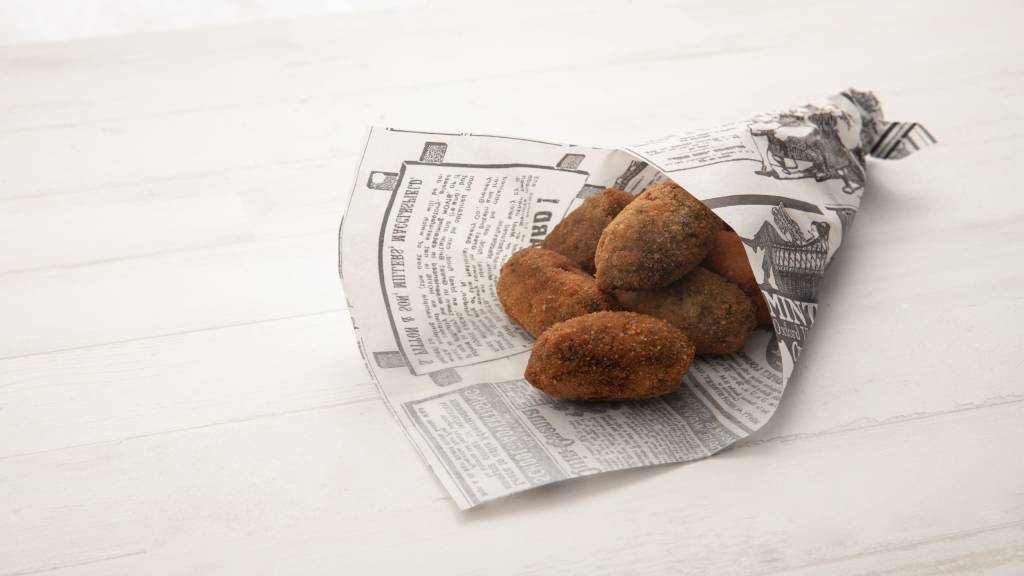
Supplì vs Arancini: The Roman–Sicilian Rice-Ball Rivalry Explained Properly
Supplì or arancino? Both begin with rice, hide a filling, wear a breadcrumb coating and end up in hot oil. Yet treating them as the same food erases two distinct traditions: one profoundly Roman, the other Sicilian and expressed through numerous local identities.
A classic supplì al telefono is generally small and elongated, with tomato-seasoned rice and a melting mozzarella centre. An arancino—or arancina—is usually larger, round or conical, and may contain meat ragù and peas, ham and cheese, aubergine or many other fillings. The real contest is not about declaring a winner, but understanding structure, rice, seasoning, history and context.
Would you like to begin tasting Rome with its most irresistible street food? The best rooms for your dates may sell out: check Hotel Domidea’s live availability and book now. For accommodation or dietary questions, email info@hoteldomidea.com.
Supplì and arancini at a glance
| Feature | Roman supplì | Sicilian arancino/arancina |
|---|---|---|
| Origin | Rome and Lazio | Sicily |
| Typical shape | Elongated oval | Round or conical, with local variation |
| Typical size | Smaller | Larger |
| Rice | Usually seasoned throughout with tomato or ragù | May use saffron or other seasoning around a distinct filling |
| Classic centre | Melting mozzarella | Meat ragù and peas, or ham and cheese, depending on style |
| Cultural role | Pizzeria appetiser or snack | Substantial street food or light meal |
These are models, not laws. Contemporary supplì may taste of cacio e pepe, amatriciana or carbonara, while Sicilian counters offer pistachio, fish, aubergine and seasonal arancini.
What is a Roman supplì?
A supplì is a breaded, fried rice croquette rooted in Roman popular food. In the classic version the rice is red from tomato or meat sauce, with mozzarella placed at the centre.
Rome’s official tourism website describes a traditional recipe using thoroughly red, meat-sauce-seasoned rice, egg and mozzarella. Home and professional recipes still vary in their ragù, use of chicken giblets, egg, cheese and single or double coating.
Why “al telefono”?
When the hot croquette is broken in half, melted mozzarella should stretch between the pieces like the cord of an old telephone. The image refers to the cheese strand, not the shape.
The effect is photogenic but not the only test of quality. Rice, sauce, crust and temperature matter just as much.
What is a Sicilian arancino?
An arancino, called arancina in much of western Sicily, is a stuffed, breaded and fried rice timbale. It may be round, recalling an orange, or conical. Compared with a classic supplì, its rice often forms a more evident casing around a complex filling.
Famous versions include:
- meat ragù, often with peas;
- “al burro”, often containing ham and melting cheese;
- spinach;
- aubergine, or alla Norma;
- pistachio;
- mushrooms, seafood or seasonal ingredients.
No single recipe represents the whole island.
Arancino or arancina—which is correct?
Both forms are legitimate in regional usage. The Accademia della Crusca explains that arancina is especially established in western Sicily, while arancino dominates much of the east, with local exceptions.
The feminine form echoes standard Italian arancia; the masculine also reflects Sicilian aranciu and its diminutive arancinu. Italian dictionaries and the national Traditional Agri-food Products list use the masculine “arancini di riso”, but this does not invalidate Palermo’s arancina.
The gracious solution is to respect local speech: arancina in Palermo, arancino in Catania, while listening to the person who made it.
Origins without easy legends
The history of the supplì
The name supplì is often linked to French surprise, supposedly adapted into Roman speech to describe the hidden centre. It is a widely repeated explanation, though food etymologies are difficult to prove conclusively.
The supplì became established in Rome as a clever way to turn seasoned rice into an affordable, portable fried snack, later becoming inseparable from pizzerias and takeaway shops.
The history of the arancino
Arancini are frequently traced to Arab Sicily and a habit of eating spiced rice with meat. The Crusca urges caution: precise records of the food do not appear before the second half of the nineteenth century. An 1857 Sicilian dictionary even described a sweet rice dish shaped like an orange.
Techniques and ingredients may have accumulated gradually. Arab influence, savoury transformation, tomato ragù, breading and frying need not have appeared at the same moment.
Ten differences that really matter
1. The relationship between rice and filling
Supplì seasoning permeates the rice; arancini often use rice as a casing around a distinct centre.
2. The shape
Supplì are elongated; arancini may be spherical or conical.
3. The size
Supplì are generally appetiser-sized; arancini can form a meal.
4. The rice
Roman rice is often cooked or finished in its sauce; Sicilian preparation varies and may use saffron.
5. The tomato
It is central to red supplì, but not required in arancino rice or white fillings.
6. The melting cheese
Mozzarella defines the “telephone” effect; arancini may use different cheeses without that symbolism.
7. The ragù
It can coat supplì rice, while it generally forms a clear centre in meat arancini.
8. The coating
Both use breadcrumbs, but binders, thickness and double-coating methods differ.
9. The role in the meal
Supplì often precede Roman pizza; an arancino commonly stands alone.
10. Territorial identity
One speaks the language of Roman frying shops, while the other varies across Sicily.
Which came first?
The answer depends on what counts as the first form: a rice ball, fried croquette or modern recipe with a specific filling.
Reliable evidence does not justify simplistic dates. Both acquired recognisable modern identities through nineteenth- and twentieth-century changes in urban popular cooking.
What makes a good supplì?
A well-made supplì should have:
- a crisp, golden crust without excess oil;
- cooked but distinguishable rice grains;
- evenly distributed seasoning;
- a hot, melted centre;
- enough structure to survive the first bite;
- balanced salt.
A cold centre, watery or gluey rice and burnt breadcrumbs are warning signs. A long cheese strand cannot rescue flavourless rice.
What makes a good arancino?
The main criteria are:
- a rice casing that is compact but not heavy;
- a distinct, well-distributed filling;
- an even crust;
- a properly hot centre.
Size alone does not equal value: too much rice and too little filling produce poor balance.
Modern variations: evolution or betrayal?
Modern supplì borrow from carbonara, amatriciana, cacio e pepe, oxtail and salt cod. Arancini may showcase pistachio, swordfish, cuttlefish ink, vegetarian ragù or local cheeses.
Innovation works when it is clearly described and technically coherent. It becomes misleading when presented as the only “original” or when a creative name conceals ingredients and allergens.
Is a carbonara supplì traditional?
It is a contemporary meeting of two Roman icons, not a replacement for the classic red version.
Are pistachio arancini authentic?
They may be well established in certain shops and areas without representing all Sicilian tradition.
Why rice croquettes split while frying
Common causes include overly wet rice, poor sealing, watery mozzarella, incomplete coating, insufficiently hot oil and overfilling.
Double breading can add strength but also thickness. The best solution begins with balanced rice and careful shaping.
Freshly fried or reheated?
Freshly fried products offer the best crust but can be dangerously hot inside. Waiting briefly reduces the risk of burns.
A reheated item can still be enjoyable when chilled, stored and regenerated correctly; the issue is handling and texture, not reheating itself.
Where to eat supplì in Rome
Supplì appear in pizza-by-the-slice shops, frying shops, rosticcerie, markets and trattorias. Rome’s official tourism site lists several specialist businesses, but addresses, hours and menus change. A permanent “best supplì” ranking confuses personal taste with fact.
To choose well:
- look for a shop with good turnover;
- ask whether items are fried to order;
- taste the classic before experimental versions;
- read the price and ingredients;
- ask about the shared fryer if you have allergies;
- verify opening times.
Trastevere, Testaccio, the historic centre, San Giovanni and residential districts all offer different styles.
Where to eat arancini in Rome
Sicilian pastry shops, delicatessens and regional takeaway counters sell arancini and arancine. Look for a clearly described local style, transparent fillings and proper frying or reheating.
Calling a product arancina does not prove Palermo origins, just as a cone shape does not automatically certify Catania style.
Price and portion
Prices vary with size, ingredients, labour, neighbourhood and service. Since arancini are generally larger, comparing only price per item is misleading.
Ask about size and filling before ordering a tasting selection, and check whether table service costs more than takeaway.
Vegetarian, vegan and gluten-free versions
Classic supplì may contain meat ragù, egg, mozzarella and cheese. A tomato-and-basil label still does not guarantee vegetarian stock or a dairy-free recipe.
For vegan products, verify rice, stock, binders, filling, coating and frying oil. Gluten-free versions need suitable breadcrumbs and controlled handling; a fryer shared with breaded wheat products may cause cross-contact.
The same cautions apply to arancini: meat, ham, butter, cheese, egg and breadcrumbs are common.
Allergens
Potential allergens include:
- gluten in breadcrumbs;
- milk in mozzarella, cheese and white fillings;
- egg in the rice mixture or the coating;
- celery in ragù or stock;
- nuts in pistachio versions;
- fish, molluscs or shellfish in seafood fillings;
- sulphites in wine and preserved ingredients.
Shared oil transfers traces between foods. Anyone with an allergy should speak to staff before ordering rather than relying on the flavour name.
What to drink
Dry sparkling wine, a fresh Frascati or a light beer work with classic supplì. Young Cesanese suits meat or oxtail variations. With saffron-and-ragù arancini, choose a structured white, rosé or light red according to the filling.
Sparkling water, unsweetened iced tea and tart citrus drinks refresh the palate without alcohol. Drink responsibly and never drink and drive.
Final verdict
Supplì wins when you want a quick, melting Roman bite before pizza. Arancino wins when you want a more substantial rice timbale with a complex Sicilian filling. A thoughtful tasting lets both win because they answer different appetites.
The useful question is not “which is better?” but “which version, made by whom and eaten when?”. A serious rivalry ends with two orders, not one verdict.
Hotel Domidea: your starting point for tasting Rome
From Hotel Domidea, guests can plan routes through Roman pizzerias, markets and neighbourhoods. Travel times vary with traffic and service changes, so check routes before departure.
The hotel’s official website lists affiliated restaurants nearby, but we do not attribute supplì or particular versions to them without a verified menu. For current information, hotel services or dietary needs, email info@hoteldomidea.com.
The supplì–arancino debate can wait; the right room for your dates may not: check availability and book Hotel Domidea directly now. Questions before booking? Contact info@hoteldomidea.com.
Frequently asked questions
What is the main difference?
A Roman supplì is normally small and elongated, with tomato-seasoned rice and mozzarella. A Sicilian arancino is generally larger, round or conical, and built as a rice timbale around a distinct filling.
Is it arancino or arancina?
Both forms are legitimate in regional use: arancina prevails in Palermo and western Sicily, while arancino is common in Catania and much of the east.
Why is supplì called “al telefono”?
Melted mozzarella stretches like an old telephone cord when the hot croquette is pulled into two halves.
Does classic supplì contain meat?
Often yes. Traditional Roman versions may use meat ragù, sometimes with giblets. Check the individual recipe.
Does an “al burro” arancino contain only butter?
No. The name usually describes a white filling that may include cheese and ham.
Which one is larger?
Usually the arancino, although there is no universal weight and each producer chooses a size.
Where can I eat supplì in Rome?
Try pizzerias, frying shops, markets and rosticcerie with good turnover and transparent ingredients. Verify official opening times.
Does Hotel Domidea serve supplì?
The website does not publish permanent availability. Contact the hotel for current information.